


June's pose of the month is runner's lunge
- Hippie Yoga

- Jun 2
- 2 min read
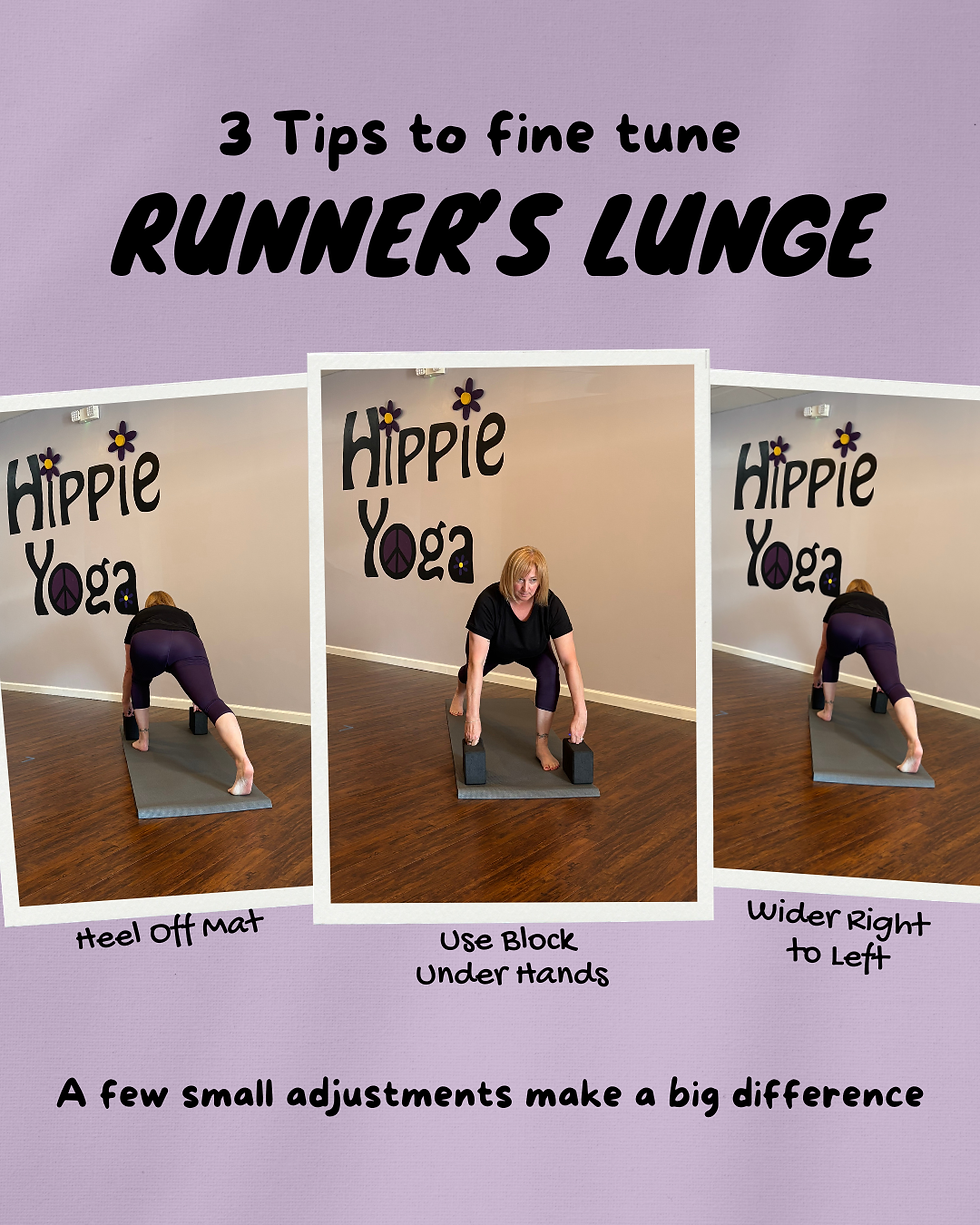
Runner's lunge is one of those poses that shows up in almost every class. Warm-ups, flows, cool-downs, It's everywhere. And yet it's one of the poses we see people struggling through the most.
Not because they're doing anything wrong. But because a few small setup choices make a surprisingly big difference in what the pose actually does for your body.
This month we're fine tuning runner's lunge. What it's targeting, why it matters, and three adjustments that change the whole experience.
What runner's lunge is actually for
The main target is the hip flexor of the back leg, specifically the psoas, which runs from your lower spine through your pelvis and attaches to the top of your femur. For most of us, that muscle is short and tight from sitting, driving, and the general business of modern life. Runner's lunge is also about creating stability as a transition to other poses like Dragon Fly Twist, Crescent or Warrior I. When it's set up well, you'll feel it. When it's not, you end up somewhere else entirely.
Three setup adjustments worth trying
1. Put your hands on blocks. One block per hand, same height. This one shift does more than you'd expect. When your hands reach the floor, your upper body tends to collapse and your hips follow. Blocks bring the floor up to you, your spine lengthens, your shoulders relax, and your hips have room to square up. It's also noticeably kinder on the SI joint. We think blocks should be the starting point in this pose, not the backup plan.
2. Widen your stance left to right. Most people set up with their feet in a narrow track. Try bringing them wider, front foot and back foot with more space between them side to side. You'll feel more stable almost immediately, and your hips will thank you. A wider base makes it easier to keep both hips pointing forward rather than one twisting out.
3. Lift the back heel. This is the one that surprises people most. When the back heel is on the floor, the back leg is more passive and you're not getting as much out of the hip flexor stretch. Lifting the heel and curling the toes under activates the back leg and brings you into the pose more fully. The catch: to do that comfortably, you usually need to adjust how far you step back. When people step back too far or to little, the heel turns inward, the knee starts to drift outward, and the stretch lands in the inner thigh instead of the hip flexor.
Runner's lunge will be our focus all of June. Bring your questions to class. We love talking about this stuff.
See you on the mat.


Comments